

One of the biggest surprises families run into when traveling to Europe isn’t the food, the language, or the jet lag.
It’s the hotel room.
Accommodations in Europe work differently than they do in the United States, and those differences can seriously affect comfort, sleep, and stress levels when you’re traveling with kids. Understanding what to expect ahead of time helps you book smarter — and avoid that “wait… this is our whole room?” moment at check-in.
Let’s break down some of the key differences that affect families.
Don’t want any hotel surprises? Work with me, and there won’t be! 💛
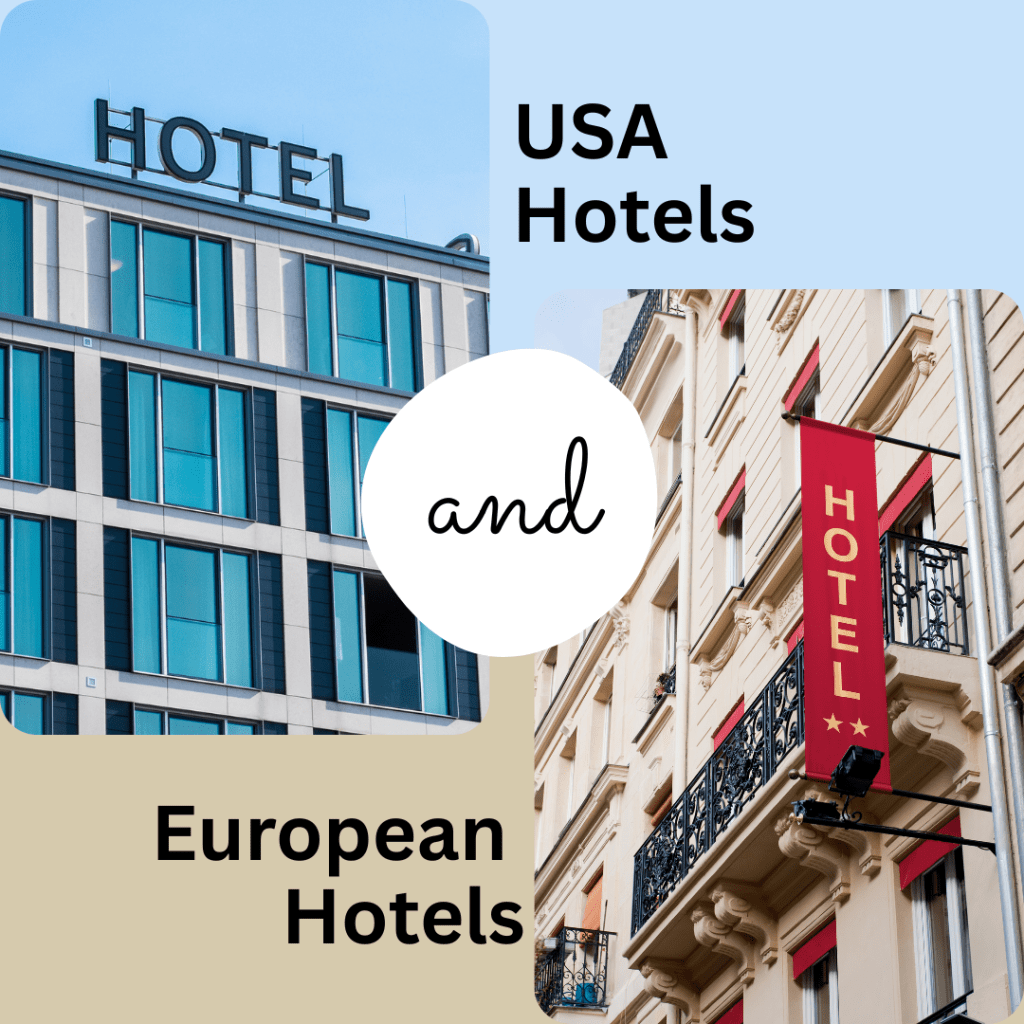
1. Room Size: Europe Prioritizes Location Over Space
If you’re used to U.S. hotels, European rooms can feel… cozy.
In the United States, even standard rooms often include two queen beds, space for luggage, and room for kids to spread out a bit.
In Europe — especially in historic city centers — hotels are frequently in older buildings where expanding simply isn’t possible. That means:
- Smaller bedrooms
- Compact bathrooms (often with showers only)
- Minimal storage space
- Limited room for strollers or extra bags
For couples, this is charming.
For families with kids, suitcases, and maybe a stroller? It can feel tight fast.
Sometimes booking two connecting rooms or an apartment-style stay through companies like Airbnb makes a huge difference. And don’t worry, I can book rental apartments, too!
2. Occupancy Rules: Europe Follows Them Closely
This is where families get caught off guard the most.
In the U.S., hotels often allow flexibility — you can sometimes squeeze a young child into a room without issue. And 2 queen beds means 4 people, minimum.
In Europe, occupancy limits are tied to licensing rules, and hotels enforce them strictly. Most hotel rooms in Europe accomodate 3 with a queen bed and a twin. That means:
- A family of four often needs two rooms, unless you’re in a “family” room (which there are fewer of) or a suite (which can cost a lot more).
- Rollaway beds aren’t always an option
- Even babies may need to be declared in the reservation
It’s not about being difficult — it’s just how their system works.
*If you are a family of 4, you NEED to book your Europe hotel reservations early. There are options, but in major cities they sell out quickly because there are fewer family rooms at each hotel!
3. Amenities: Different Expectations on Each Side of the Atlantic
If you’re used to American hotels, this is where expectations sometimes need a reset. European hotels aren’t usually built around keeping guests inside the property all day — they’re built around putting you right in the middle of the destination. That shift shows up in the amenities you’ll find (and the ones you won’t).
U.S. hotels are built for convenience. Most include things like:
- Large elevators
- Ice machines
- In-room coffee makers
- Free breakfast buffets
- Pools or kid-friendly extras
European hotels tend to focus on:
- Walkable locations
- Historic character
- Great coffee or tea setups
- Excellent on-site cafés
Things families often assume — but should double check when visiting Europe:
- Air conditioning
- Elevator size (or existence!)
- Free breakfast
- Laundry access
4. Hotel Star Ratings: 4-Star Doesn’t Mean the Same Thing
This one surprises a lot of travelers.
In the United States, star ratings often reflect amenities and consistency — a 4-star hotel usually feels modern, spacious, and predictable.
In Europe, ratings focus more on services offered than room size or modern design.
So what that means in real life:
A 4-star U.S. hotel may include:
- Large rooms
- Modern bathrooms
- Pools and fitness centers
- Family-friendly layouts
A 4-star European hotel may include:
- Beautiful historic building (that may not be accessible as we’re used to)
- Excellent location
- Concierge and room service
- But smaller rooms and classic decor that might feel “old”
Similarly, a European 5-star hotel may emphasize luxury service and atmosphere rather than giant rooms or kid-centric features.
This doesn’t mean one system is better — they just measure different things and sometimes expectations need to be re-wired a bit.
Why This Matters for Families
Here’s the thing — when you’re traveling solo or as a couple, a small room or fewer amenities might just feel charming or “part of the experience.”
When you’re traveling with kids? It can affect your entire trip.
Where you stay influences how well everyone sleeps, how smoothly mornings go, and how easy it is to reset after a long sightseeing day. A hotel that works beautifully for two adults can feel stressful very quickly for a family of four or five.
Accommodation choices impact things like:
- How easily you can unpack and stay organized
- Whether there’s space for kids to wind down at night
- If you can store suitcases without climbing over them
- How simple mornings feel when everyone’s getting ready
- Whether you have breathing room after busy sightseeing days
None of this means European hotels don’t work for families — they absolutely do. It just means choosing the right one matters more than people expect.
A little extra planning on the front end can be the difference between a trip that feels smooth and one that feels like you’re constantly working around your room instead of relaxing in it.
How I Help Families Navigate These Differences
This is exactly why I spend so much time talking through accommodations with my clients before we book anything. The right hotel isn’t just about price or star rating — it’s about how your family actually travels, sleeps, and recharges during a trip.
This is honestly one of the biggest ways I help my clients.
When you work with me, I’m not just booking “a hotel.” I’m helping you figure out:
- How much space your family actually needs
- Whether location or room size matters more for your trip style
- If two rooms will make the trip smoother than squeezing into one
- Which properties truly work for families (not just look good online)
Sometimes the right choice is a centrally located boutique hotel.
Sometimes it’s a suite, apartment, or connecting rooms.
Sometimes spending a little more upfront saves a lot of stress later.
My goal is always the same: helping you choose accommodations that make your trip easier, not harder.
Ready to book your next adventure? Let’s talk! Send me a message on Facebook or an email to Casey@MemoryLaneTravelCo.com.

 EWK Travel